Radio's Programmatic Moment
Radio's advertising challenge hasn't been effectiveness. It's been friction. Programmatic may finally change that...

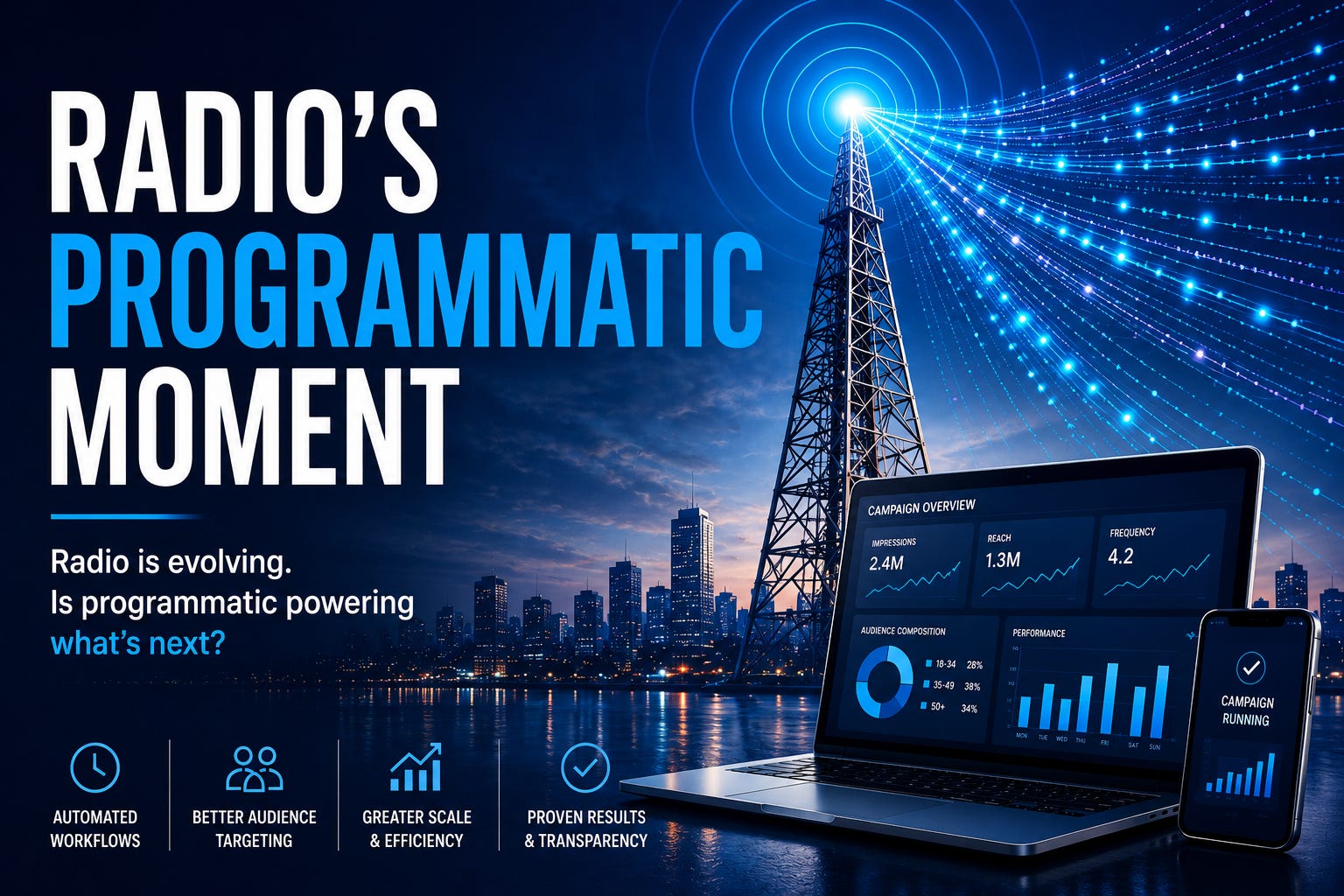
The way advertisers want to buy media has fundamentally changed, and radio has been slower to change than the people who buy it. However, with the emergence of automated platforms like Resonate (Pattison Media/Canada), AudioGraph (iHeart Media/US) and AdPower (Global/UK), that may finally be changing. Having traditionally been sold through manual (and, at times, somewhat cumbersome) workflows, radio now has products that have the potential to level the playing field with other mediums and make radio significantly easier to include in media plans.
“Terrestrial radio, despite attracting a substantially larger audience than streaming audio, has historically been limited in its appeal to marketers because of its outdated infrastructure”
– AdWeek.
Truth: the easier a medium is to buy, the easier it is to include.
Today, advertisers expect to reach targeted audiences, buy media efficiently, measure outcomes more accurately, and integrate campaigns across multiple channels. Digital media has provided these solutions, making those expectations the standard everywhere for advertisers.
As a result, programmatic audio buying has been on the rise over the last few years. According to US research by Westwood One growth has doubled; “In 2022, 41% of marketers and media agencies indicated they currently utilized programmatic audio buying. By 2026, the proportion had doubled to 82%.” Advertisers are already buying digital audio programmatically and it makes perfect sense for OTA radio to operate in that exact same ecosystem.
If we cast our minds back twenty-ish years ago, most digital advertising was bought manually (it was executed like magazine advertising). Agencies spent countless hours negotiating placements, inserted orders, managed campaigns directly with publishers and moving spreadsheets around. Today, most (if not all) of those friction points have disappeared, with much of that activity now handled automatically through programmatic and self-serve platforms. Buyers can target audiences, optimize campaigns in real time and measure outcomes in ways that would have seemed remarkable all those years ago.
Out-of-home faced a similar challenge. Traditionally, buying outdoor advertising involved selecting locations, negotiating availability and managing campaigns market by market (sometimes street by street). OOH may have been one of the media businesses we all scratched our heads about some years back – surely it would be the next channel to face newspaper level disruption? Then digital screens arrived and programmatic platforms shortly followed. Suddenly advertisers could buy audiences rather than individual locations, activate campaigns more quickly, adjust creative dynamically and align outdoor activity with broader digital campaigns. The arrival of programmatic didn’t diminish OOH, it made it more relevant for today’s advertisers. Is it any surprise then that the OOH business has been on the rise recently?
Radio is entering a similar phase…
Now, advertisers can use platforms like Pattison Media’s Resonate and iHeart Media’s AudioGraph to connect broadcast inventory directly into major programmatic DSPs or use self-serve tools like Global’s Ad Power to plan and buy schedules instantly.
Radio continues to be one of the most effective marketing channels for building awareness, trust, familiarity and emotional connection. It reaches people at scale, often in moments when other media can’t or doesn’t. It remains deeply local, highly trusted and woven into the daily habits of millions of Canadians (and Americans and Brits). I think we’d all agree that those strengths are becoming even more valuable as media consumption continues to fragment. Radio’s advertising challenge has rarely been effectiveness. Mostly, it’s been perception and friction. Are we now (finally) on a path to solving that?
“Brands today won’t spend dollars that can’t be measured. A senior agency person once told me: until broadcast is addressable and measurable, audio will never get more than 4% of budgets. So here we are.”
-iHeart Media’s CBO Lisa Coffey on what drove the development of AudioGraph.
With these new product innovations, radio can be activated in real time alongside digital, video, connected TV and OOH, making it much easier to be included in media plans. With products like Resonate, AudioGraph and AdPower we can remove past friction and create new opportunities to capture a larger share of advertising dollars.
“Radio is a live medium. It’s value changes hour by hour. Resonate allows both advertisers and broadcasters to recognize that value in real time.”
-Pattison Media’s CIO Andrew Snook on the benefits of Resonate.
I recognize that the radio industry sometimes leans towards a “glass-half-empty” view of the world, but I’m choosing optimism. These innovations are making radio easier to buy, easier to measure and easier to include in today’s media plans. After all, the easier a medium is to buy, the easier it is to include.